After a month of teaching and getting settled in, the first major Korean holiday rolled around. “Chuseok, the Korean equivalent of Thanksgiving, is a major harvest festival and a three-day holiday in South Korea. This year it took place on September 20-22 which was Monday through Wednesday. This also means that we all got a 5-day break. Normally, I love to plan ahead of holidays and schedule out everything I want to do. However, due to being so busy these past few weeks, there was no time to plan out anything major in time for Chuseok. Instead, my friends and I decided we would do several day trips to make the most of our days off. Due to COVID-19, we figured it would be best to stay within the Jeollanamdo Province which was fine with me since there are so many amazing things to explore right around where I live! Here is a breakdown of my Chuseok vacation that will hopefully inspire others to come and see the great place that is Jeollanamdo!
Day 1: Damyang and the Bamboo Forest
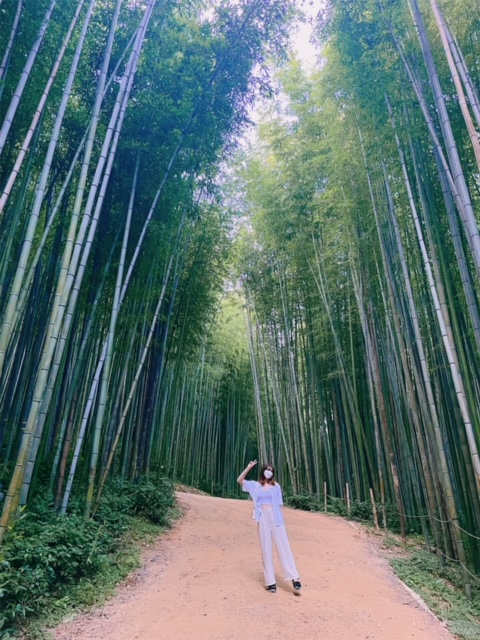
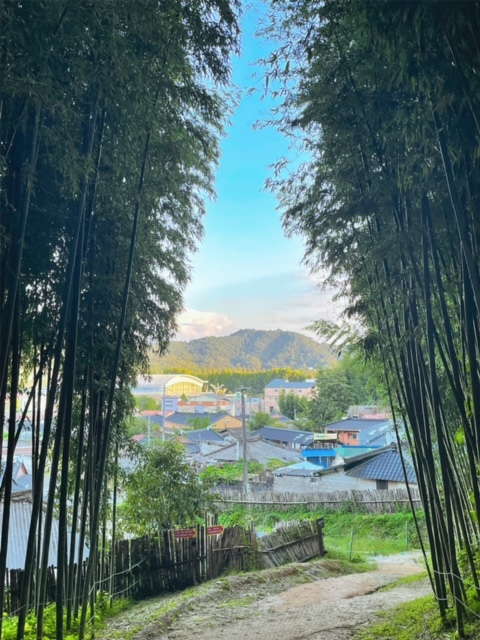
Just an hour-long bus ride from Gwangju is the county of Damyang. The biggest tourist attraction there is the bamboo forest. However, there is more to Damyang than just that. As soon as we stepped off the bus in Damyang, I immediately felt much more at peace. The calm and slow-moving feel of the town is a stark contrast to the hustle and bustle of Gwangju. Right through the town center is a flowing river. You can see many paddle boats shaped like swans and ducks on the water. Along the river is noodle street; as you may have guessed, a street that is lined with all noodle shops. You can sit beside the river and enjoy a hot or cold bowl of noodles while watching kids play with bubble wands and the elderly playing go.
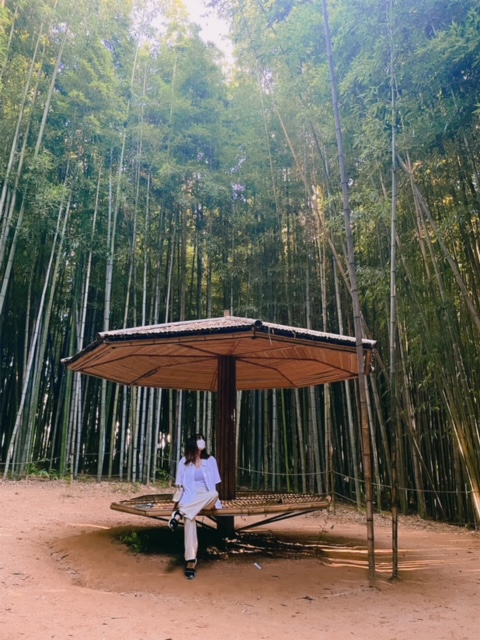
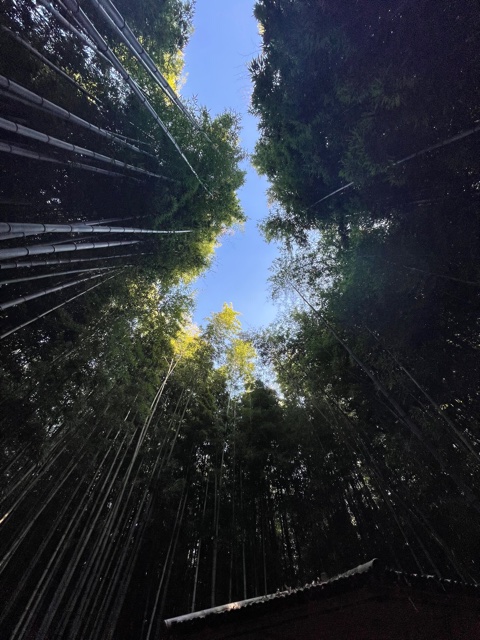
My group and I first stopped at a café that was 5 floors with modern architecture. After enjoying a cropple (croissant waffle), we walked 10 minutes over to the bamboo forest entrance. For 3,000 won, you get full access to the forest. After wandering about in the endless bamboo for a couple of hours, we headed back out to the town. We stopped for some noodles of course and then decided to head back to Gwangju. Whenever I want a break from the big city life, I will definitely be stopping by Damyang.
How to get to Damyang from Gwangju: There are several stops in which the Damyang bus will arrive but a central stop to take is Gyeongshin Yeogo (Gyeongshin Girls High School). The bus is 311 and comes in 20-minute intervals. It has a regular bus fare (around 1,250 won). The stop you get off at is 죽녹원 which drops you off right in front of the entrance. The way back is the same.



Day 2: Boseong and the Green Tea Fields
Boseong is a county south of Gwangju. It’s a bit further than Damyang so the best way to get there is on an express bus. From Gwangju Bus Terminal it was about an hour and a half. Since the tea fields are a bit away from the city center, I can’t speak much about what life looks like in Boseong since we only got to see around the green tea fields.
Right by the entrance of the fields, there is a restaurant and café. Since it was morning when we arrived, we stopped by the café for a light meal and of course, green tea drinks. Hopefully, if any of you stop by soon, you can meet the adorable dog that lives at the café. Once we finished, we headed into the fields. The entrance fee was 4,000 won.
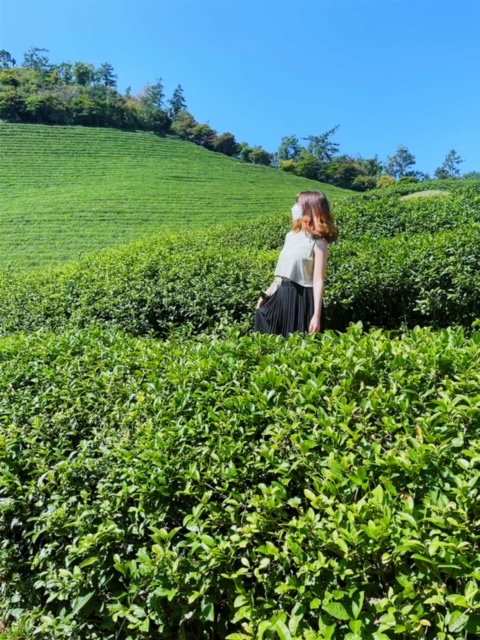
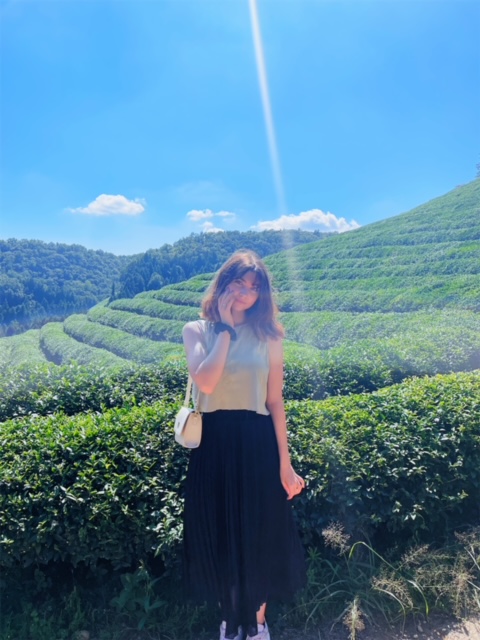
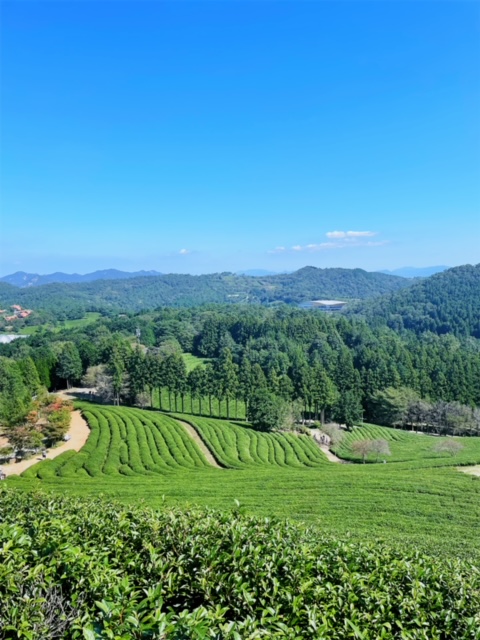
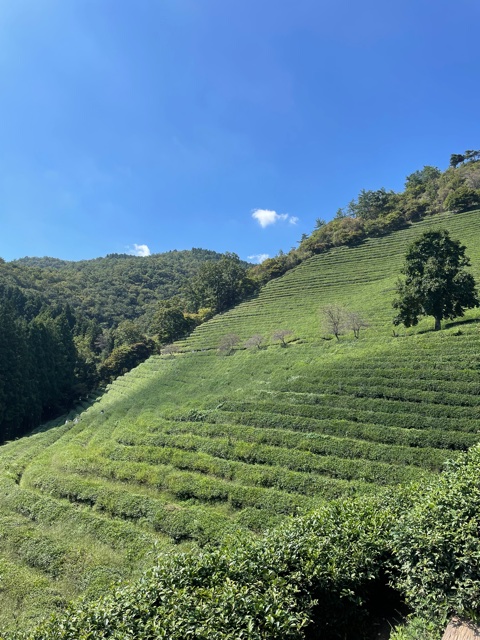
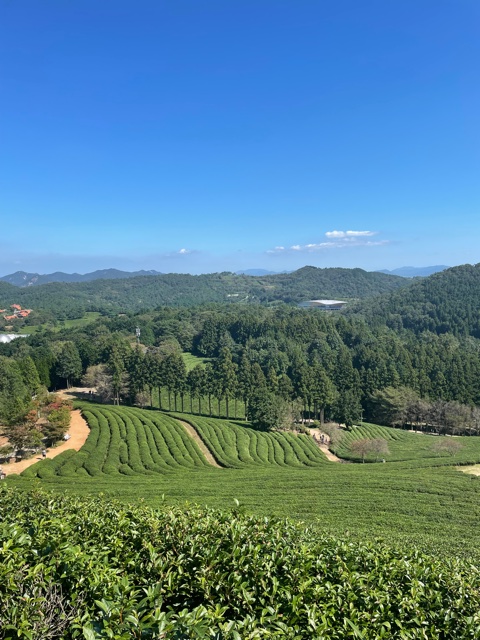
The fields are absolutely breathtaking as soon as you walk in. Endless greenery awaits you in orderly rows. Don’t be fooled by all the perfectly effortless Instagram photos of people here though. It is quite a hike up to the top and even in late September, the weather is scorching. I was luckily wearing tennis shoes but if you are accident prone like me, make sure to wear comfortable shoes.
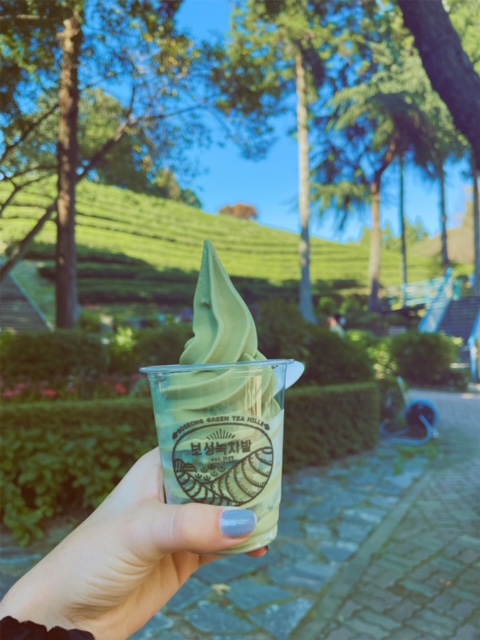
We wandered about the fields for a while on the way to the top of the hill and after taking in the view, we headed back down the other side of the trail. At the front area, there are a few gift shops and cafes that serve the famous green tea ice cream. I am not a huge ice cream fan but something about being surrounded by green tea while eating green tea ice cream makes it 100 times tastier.
How to get to Boseong from Gwangju: Head to U Square, Gwangju’s main bus terminal. Once you get there, you can find many tickets machines that also have an English option. Simply select your destination (Boseong), your time of departure, and your seat on the bus. An express bus will cost 10,500 won. From the bus terminal, you can take any bus that drops you off nearest to the Green tea fields. I would recommend pulling up Naver maps and seeing which bus will arrive first and drops you off closest to the fields.
Day 3: Hampyeong and Deolmeori Beach
For the last day of exploring around our province for a bit, we decided to head to the beach. Our province is mostly coastal so it’s not hard to get to the beach, it’s hard to decide which one to go to. We ended up choosing to go Hampyeong because it was recommended by some of the Korean teachers at our schools. It’s also very fast to get to. After a 50-minute bus ride, we arrived in Hampyeong and made our way to the beach.
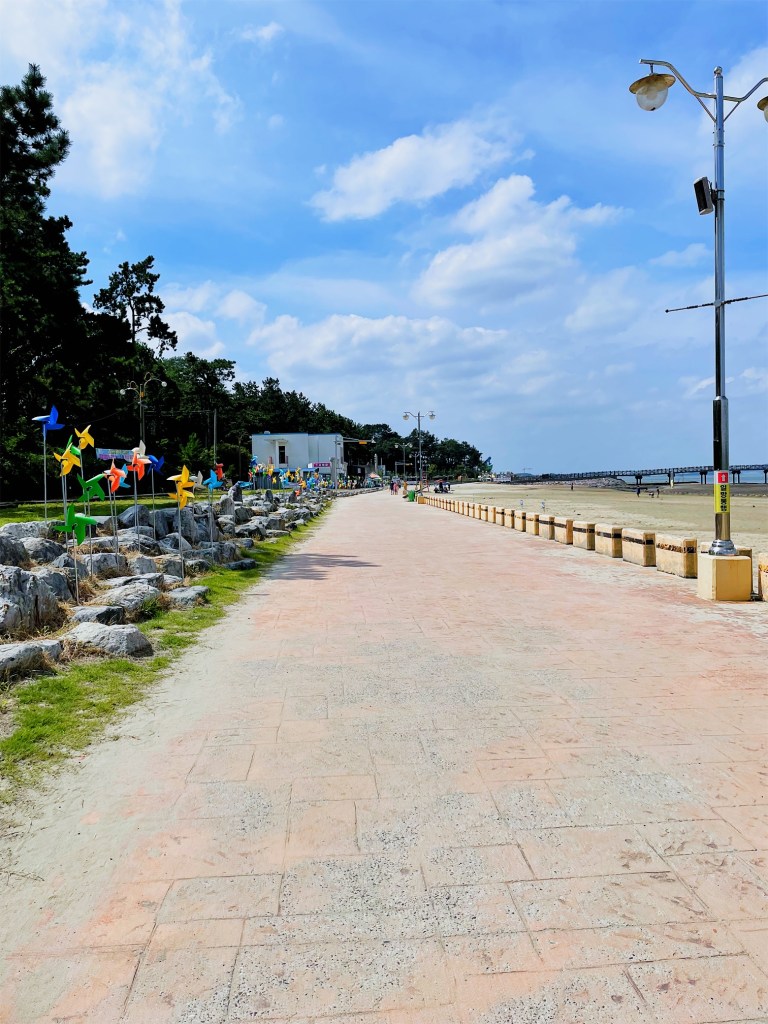
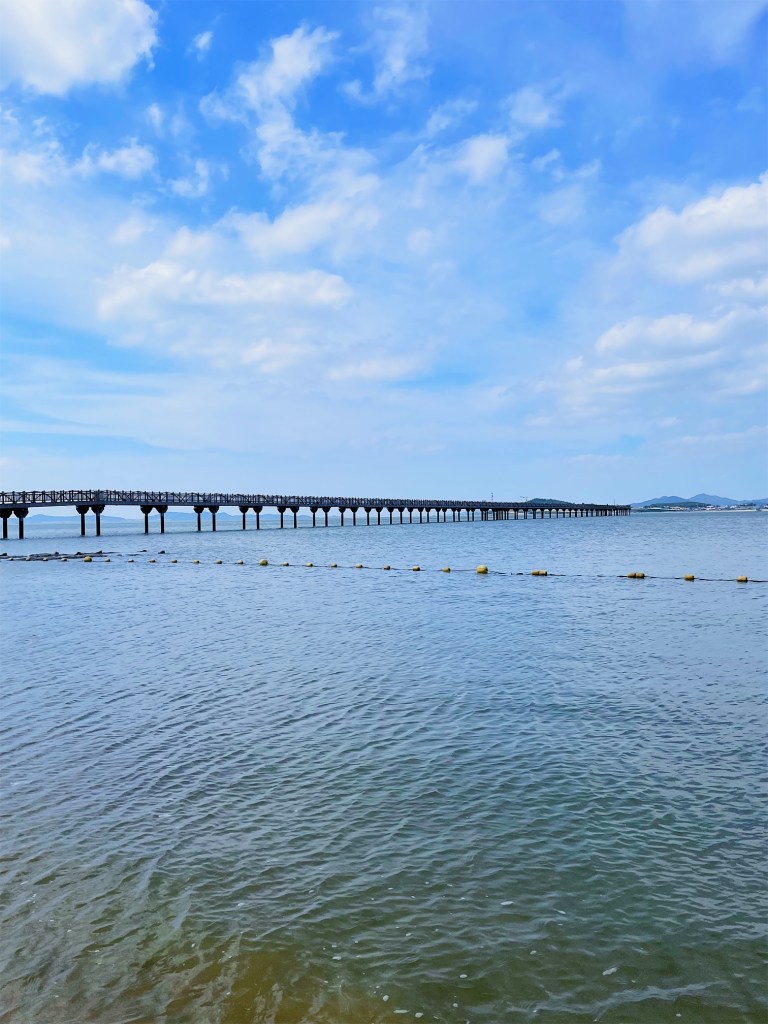
The weather was beautiful and breezy and the sea is surronded by small beach towns. When we got there, the tide was very low which allowed us to see many families crouching down to catch as many crabs as they could. After walking down the pier and around the beach a bit more, we headed to the convenience store for some beer and ramen. As we sat and talked, the tide came in which made for a beautiful landscape. Out of all the moments throughout the days, this was the one that made me realize how lucky I am to be experiencing these amazing moments.
How to get to Hampyeong: The process of getting to Hampyeong is the same as Boseong. From U Square, buy an express bus ticket. You can either choose a direct bus for 10,000 won which will take 30 minutes or a non-direct bus for 4,000 won which will take 50 minutes. I think the better deal is the non-direct bus. If you are really strapped for cash, there is a regular city bus (bus 500) that goes to Hampyeong from Gwangju but it does take about 1 hour and 20 minutes and you’re not guaranteed a seat. From the Hampyeong bus terminal though, you will get on bus 500 to Deolmeori beach.

Day 4: Being a tourist in Gwangju
Sometimes when you live in a city, you forget you can be a tourist whenever you want. The Tuesday of our long weekend was the day that Chuseok actually happens so we knew many things would be closed. It was a good day to simply walk around our city a bit more.
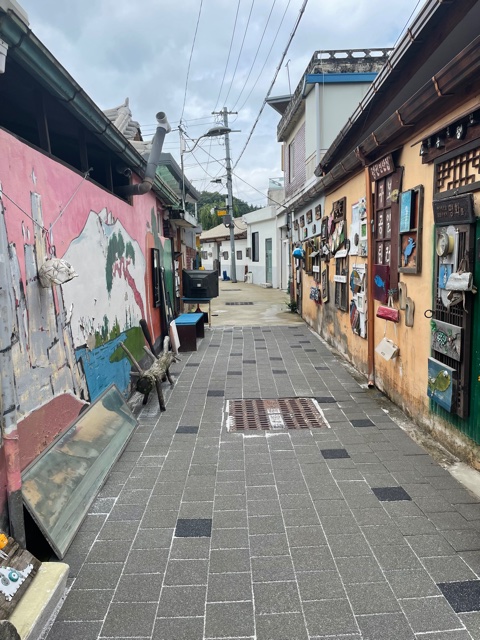
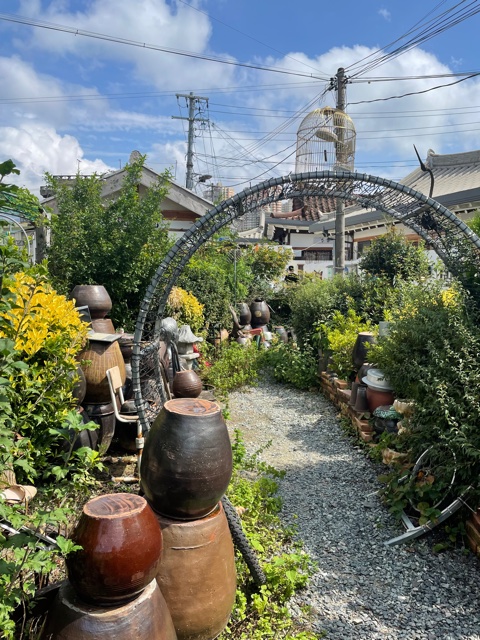
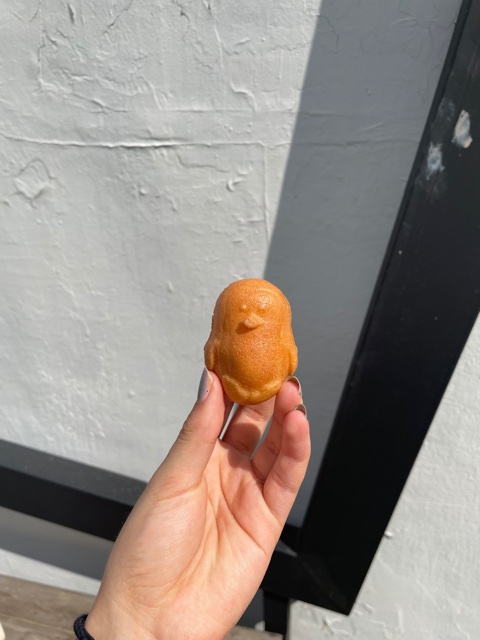
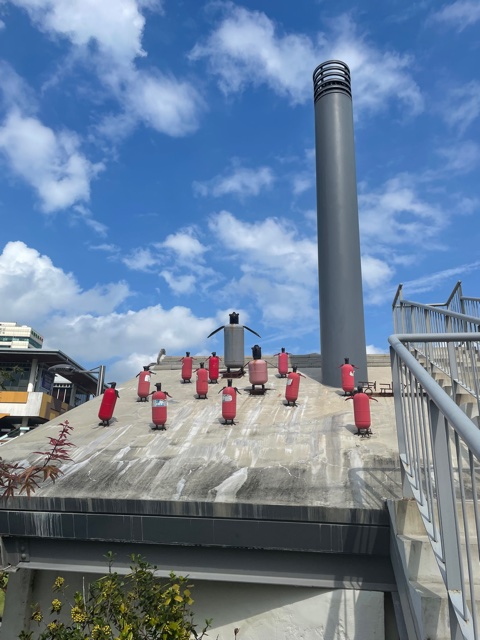
We started in the Penguin Village which is what comes up on most “What to do in Gwangju” blogs. It’s a traditional Korean village in the middle of Gwangju and as you may have guessed, everything is themed penguins! Every alleyway is covered with street art and murals. You will find tucked-away gardens filled with curious items. On a regular day, there are many art stores to buy unique pieces from.
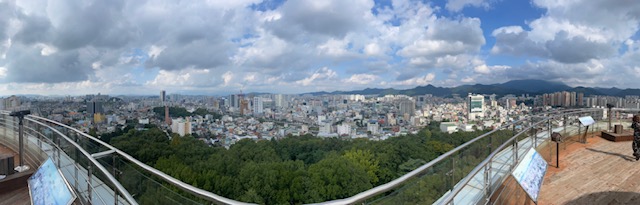
A 15-minute walk from the penguin village is Sajik Park. The park is huge and you could spend a whole day walking through it but we headed for the Sajik Observatory Tower in the middle of the park. You can take an elevator up to the top where you’re greeted by an insane view. I knew Gwangju was big but seeing it all from above made me realize that it’s not just big, it’s huge. I think someone who lives in Gwangju for 80 years and tries a new restaurant every day would still not eat at every place in Gwangju.
Finally, after taking in the sites a bit longer, we walked about 15 minutes to Chungjang-ro. This is the shopping district of Gwangju and perhaps the trendiest and busiest area in the city. There are streets and streets of clothing stores, pubs, clubs, and many photo booths. We stopped into Loft 28, a foreigner-owned pub, for drinks to end the day. If you want a break from stumbling through Korean conversations, head to Loft 28.
After winding down, we all headed back to our apartments to catch up on some much-needed sleep from the jam-packed days we had. Overall, this Chuseok made me the biggest advocate for Jeollanamdo. There are so many amazing things to see in the southernmost province of Korea. After all, there is a reason it’s called the hidden gem of Korea!



Finding your way back home
A lot of blogs rave about how easy it is to get around in Korea, which is true…if you live in a big city. Thankfully, Gwangju is a big city and I can go anywhere from the bus terminal here. However, it’s getting back that is tricky. Going from the airport-sized, high-tech bus terminal in Gwangju to a rural bus terminal that is a tiny building with one worker and no English is difficult.
If you are going on a day trip, I suggest leaving earlier in the day than you may want just to be safe. Buses in the countryside are less frequent and stop running earlier in the day. Whatever bus will get you back to the terminal (again use Naver), take that. From there, you can buy a ticket back to Gwangju or whatever city. If there is no ticket machine, you might have to use a translation app or your Korean skills to ask for the next bus arriving to buy a ticket.
For a traveler who likes to have my plans and routes thoroughly organized, navigating rural Korea might seem like a nightmare. Trust me, I was that traveler. However, you will notice how kind locals can be even if they don’t speak any English. They also don’t want you to be stranded at a bus terminal so when in doubt, ask. Even if you end up on an hour and a half bus that makes 80 stops from Hampyeong to Gwangju (totally not speaking from experience), the important part is you made it back anyway! And those small hiccups is what makes for great stories later…right?


So much beauty. It is hard to believe how much there is to see just in your province. The Bamboo Forest is just incredible. I am so happy for you and love that you are exploring already, even if it is just close to home. Now you will know where to go back to for a second visit and when the Lockdowns end, you can venture to other areas of Korea and to other countries. I am so glad you have a great group of friends to travel with.
LikeLike